Paper & Practice
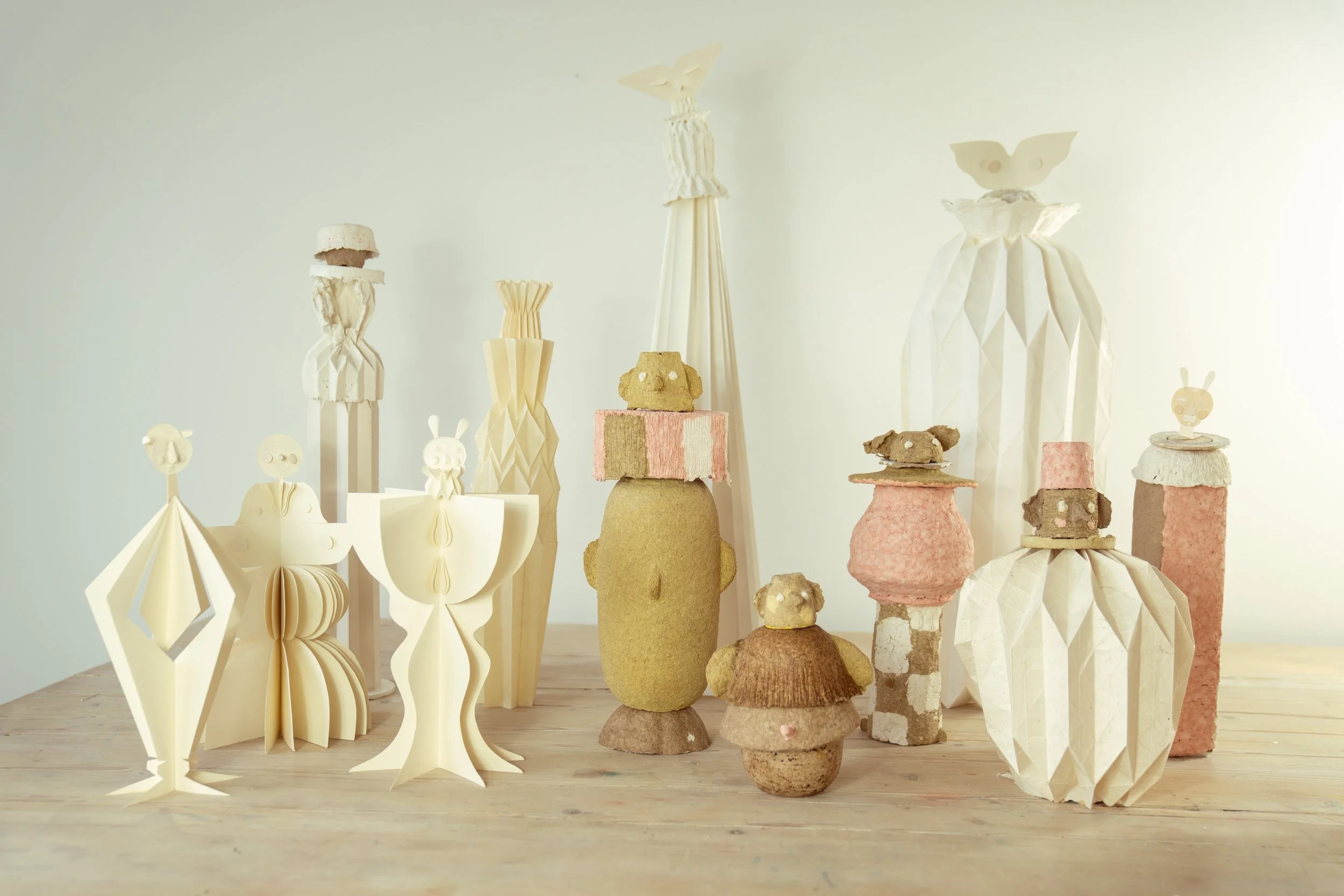
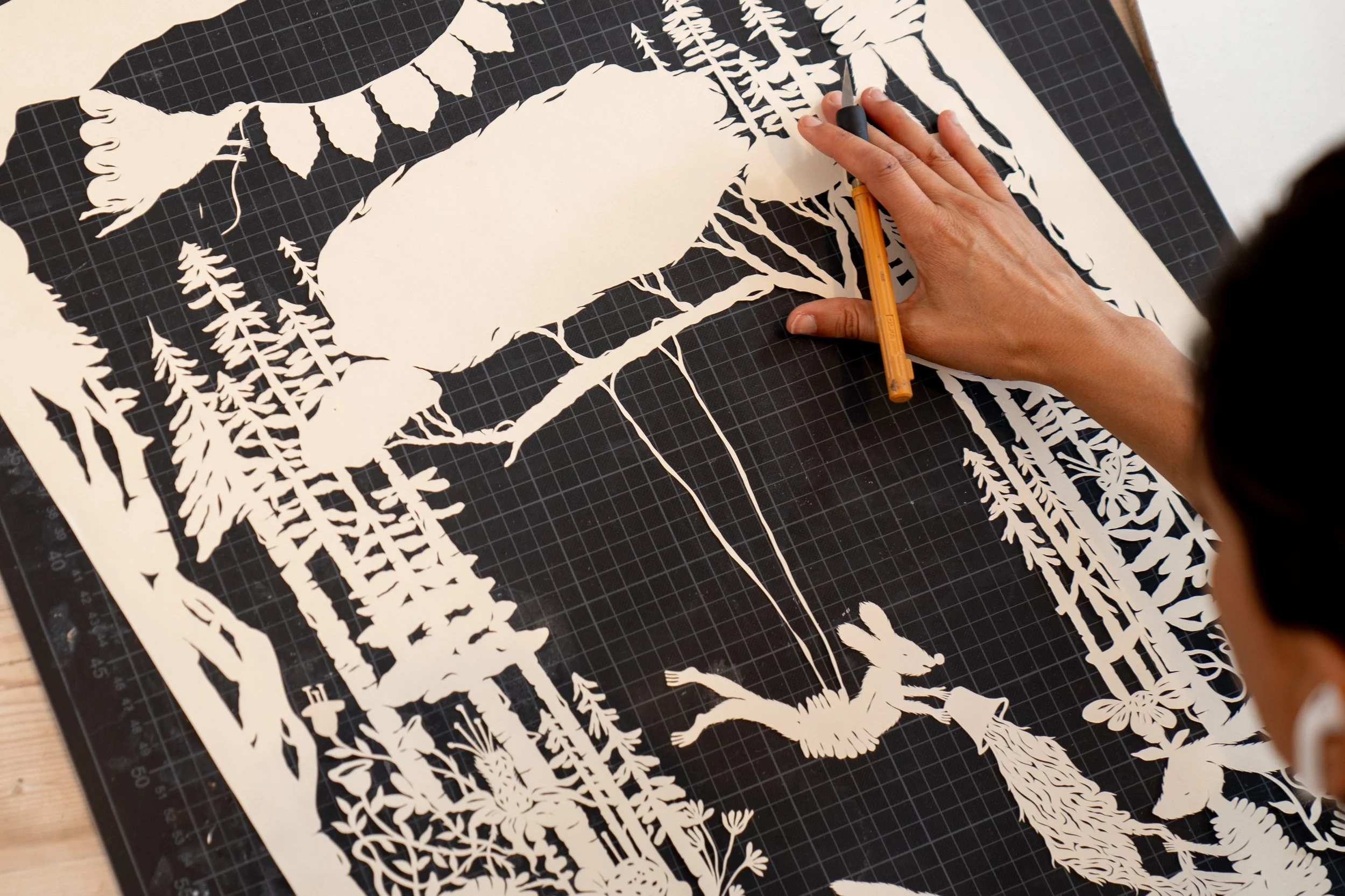
I have been exploring paper and all the possibilities that emerge when I work with its fibers for more than 10 years. To me, talking about paper means talking about a versatile material that can be transformed and combined in unexpected ways.
I started by cutting paper and exploring paper-cutting techniques, and I have continued to experiment, research and discover new ways to work with paper ever since. My research incorporates techniques such as embossing, screen printing, cyanotype, drypoint, origami, encaustic, collage, and various wet processes, including the production of handmade paper, papier-mâché, and cartapesta.
In my workshops, I aim to provide an overview of the results when these techniques combine and interact. The idea is to experiment, try things out and discover new possibilities, so that you can gradually find your own artistic language.
If you need help developing a project, would like to participate in my workshops or simply want to exchange ideas, please get in touch. I’d love to discuss it with you and see how we can make it happen.
Below, I share some ideas about the techniques I research and combine in my workshops, as well as the different ways I approach paper and explore its possibilities.
Hace más de 10 años que investigo el papel y todas las posibilidades que aparecen cuando dialogo con las fibras. Para mí, hablar de papel es hablar de un material que se puede transformar, combinar y llevar a lugares inesperados.
Empecé recortando papel y desde entonces no paré de investigar y descubrir nuevas formas de trabajarlo. Algunas de las técnicas que forman parte de mi investigación son: paper cutting, origami, gofrado, papel maché, serigrafía, cianotipia, punta seca, encáustica, collage y diversos procesos con agua, como la producción de papel artesanal o pulpa de papel.
En mis talleres busco que puedas llevarte una mirada general sobre lo que sucede cuando todas estas técnicas se cruzan y se relacionan entre sí. La idea es experimentar, probar y descubrir nuevas posibilidades para encontrar, de a poco, tu propio lenguaje.
Si necesitás ayuda para desarrollar un proyecto, tenés ganas de participar en mis talleres o simplemente querés intercambiar ideas, escribime, me va a encantar poder conversar con vos.
A continuación, te comparto algunas ideas sobre las técnicas que investigo y combino en mis talleres.
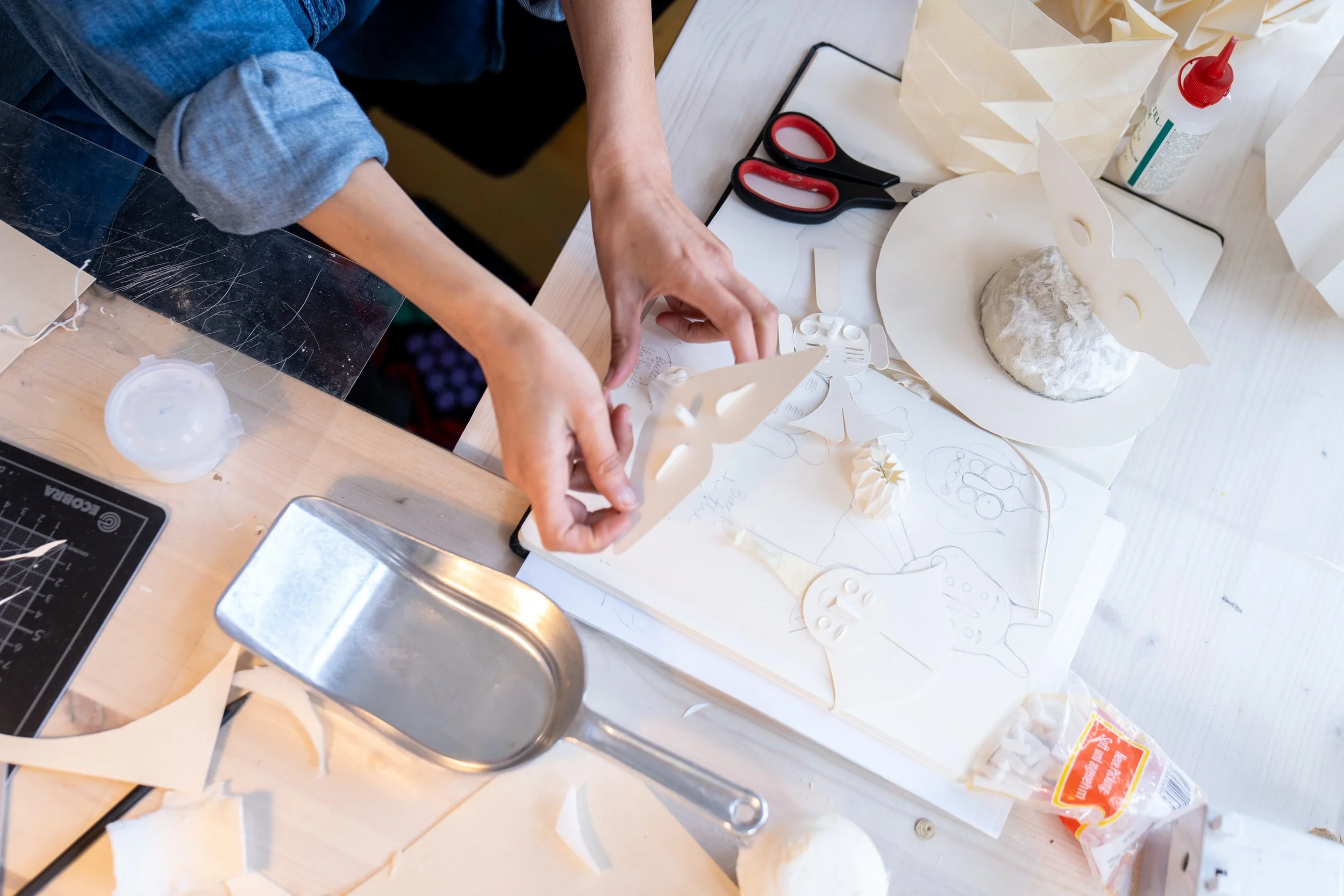
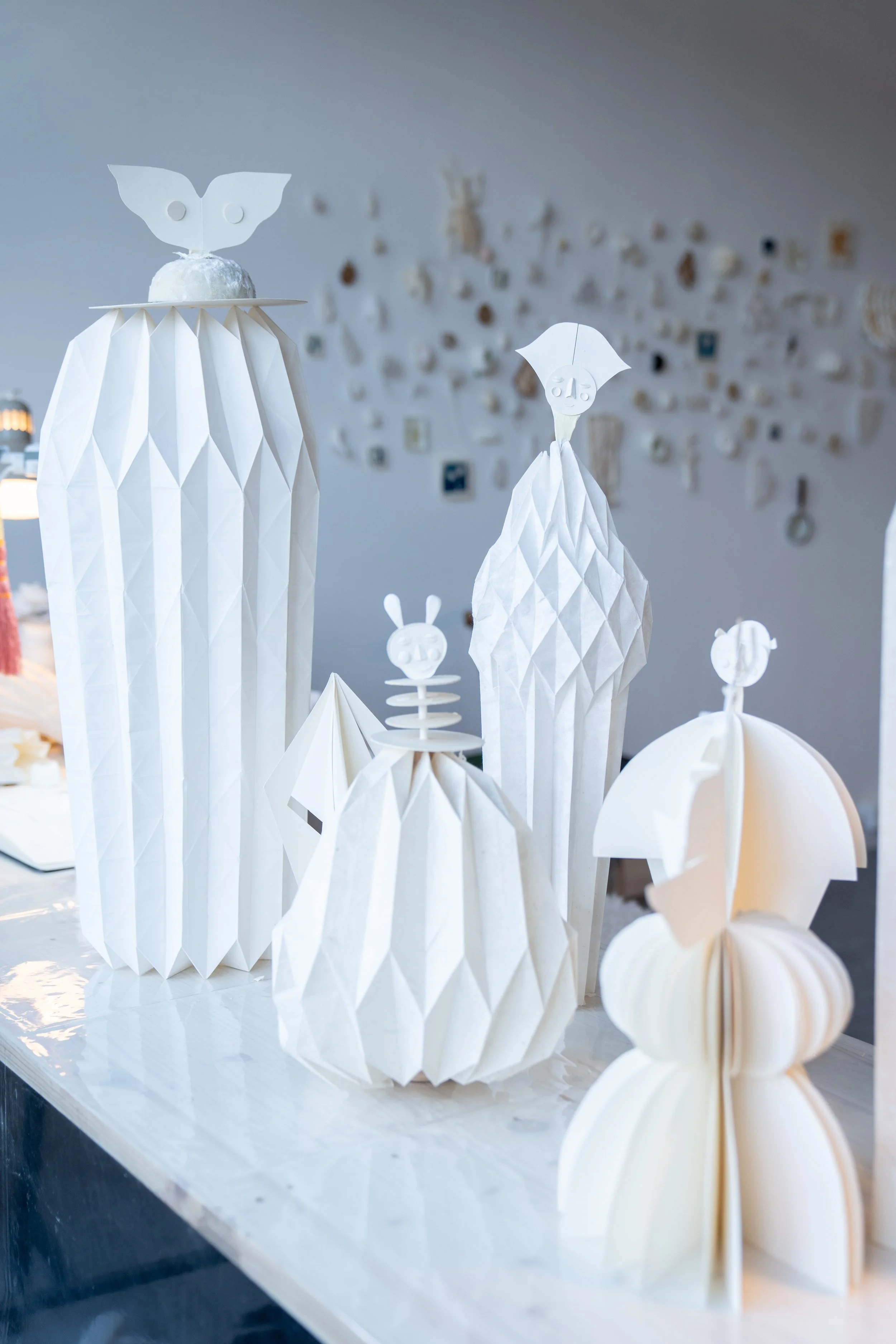
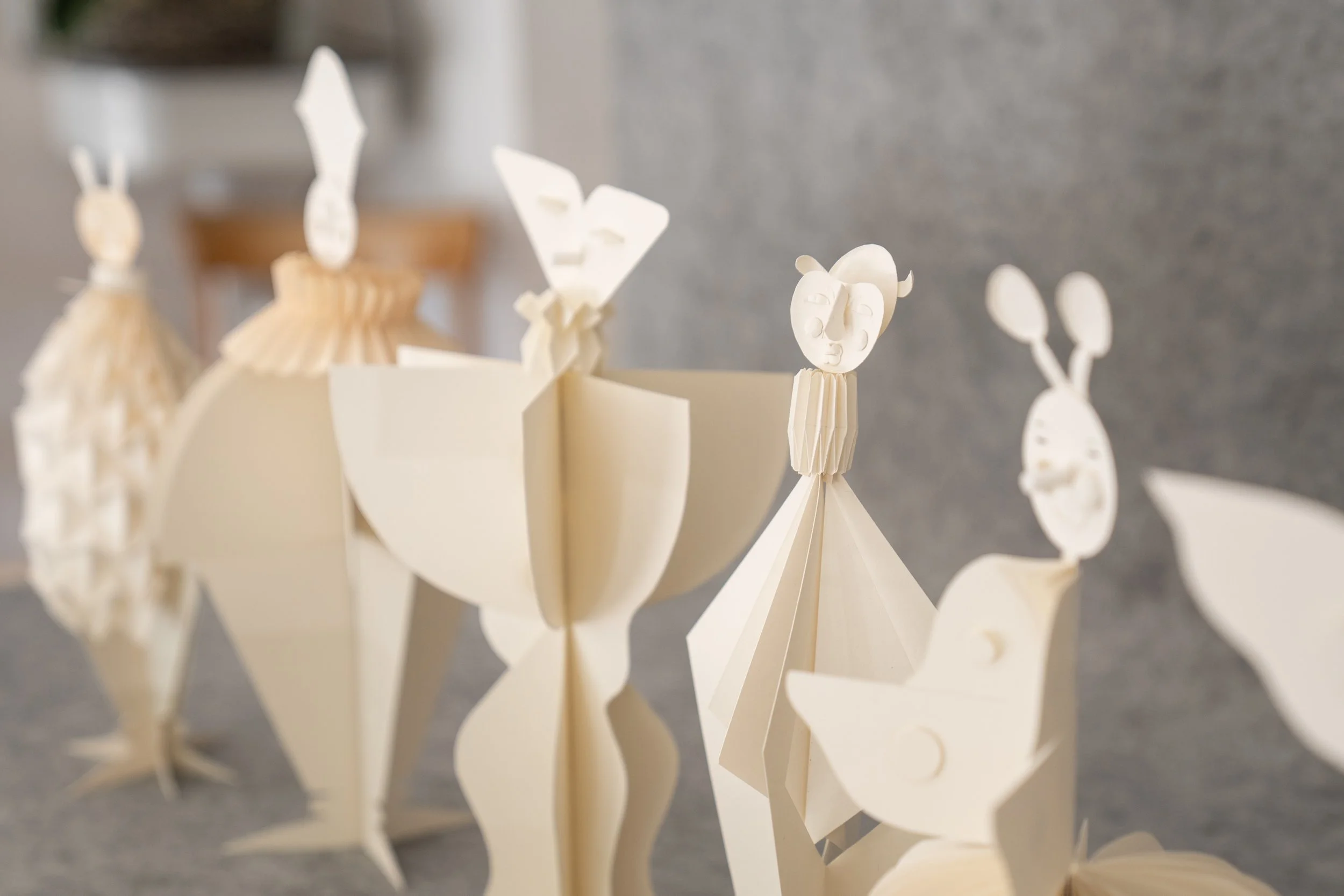
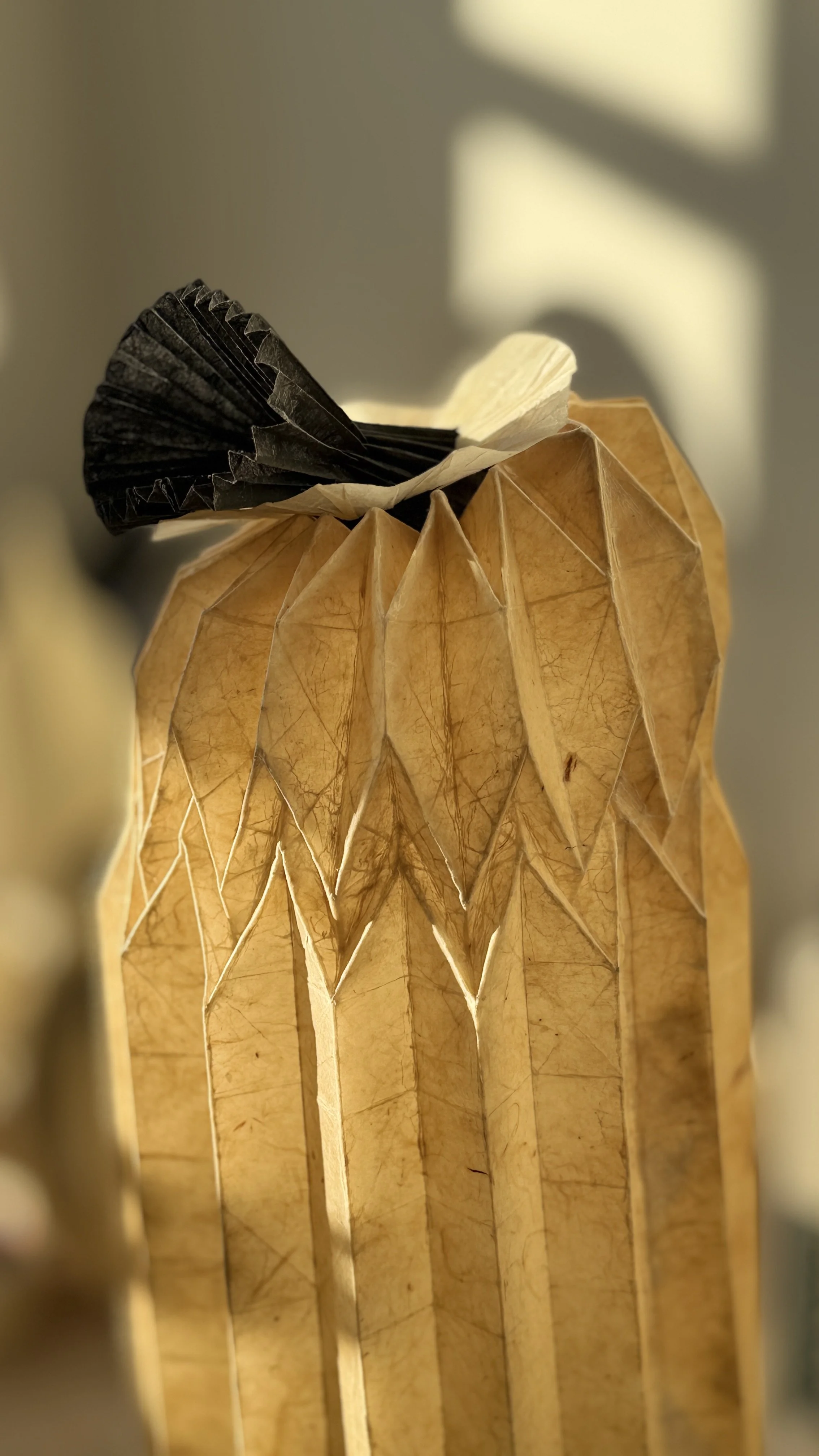
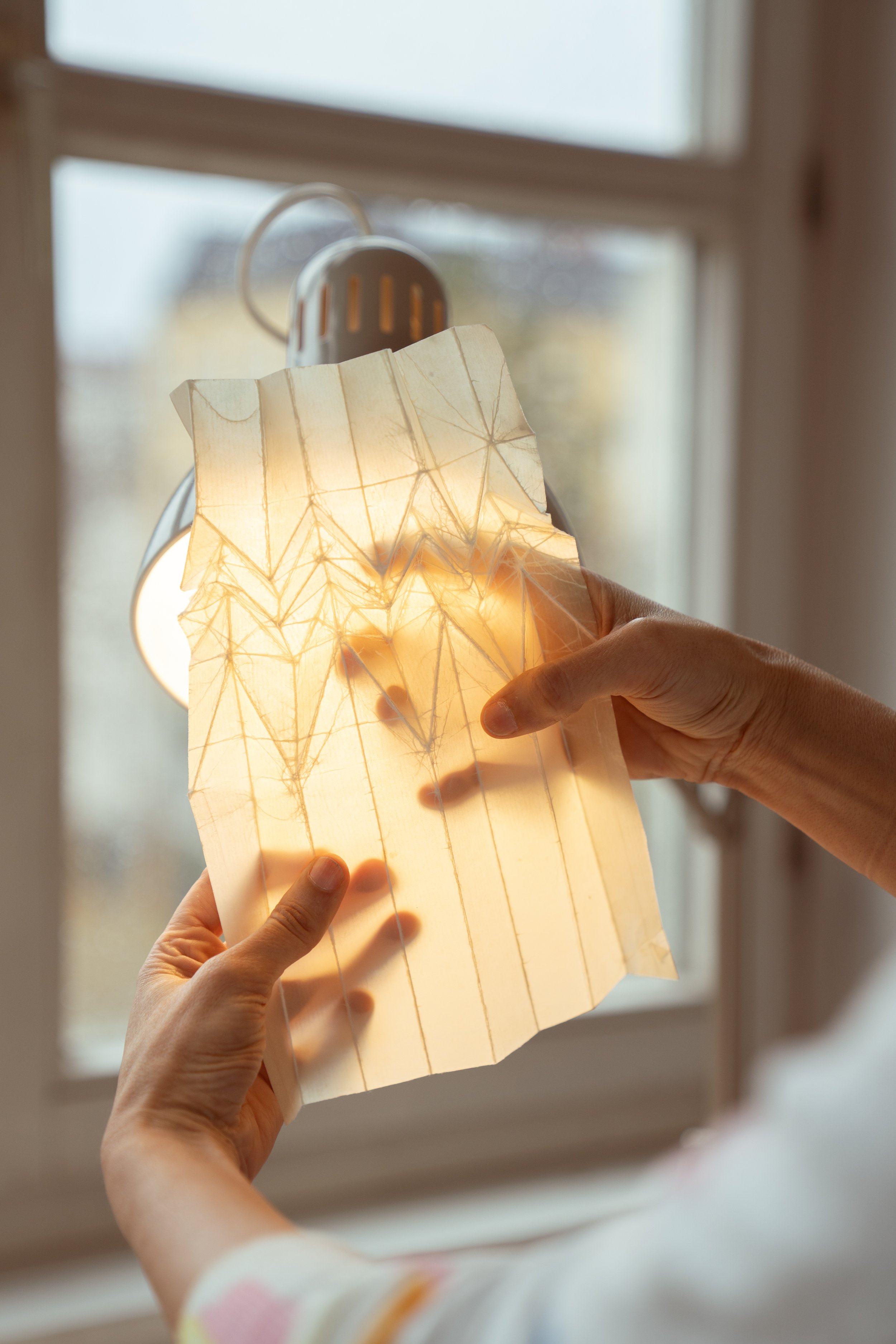
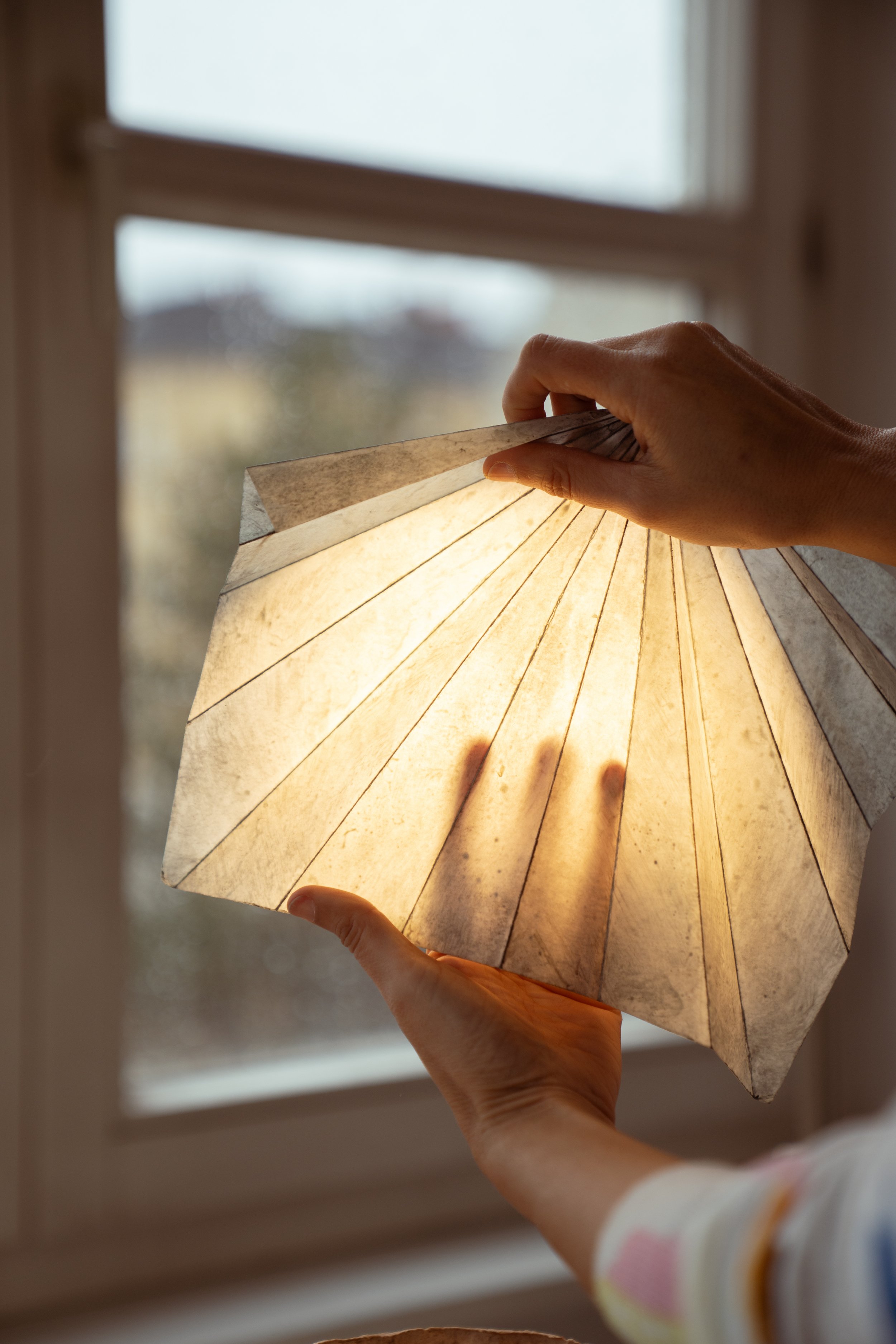
Folding and waxing paper.
Sometimes, we want to create new textures, make paper more flexible or increase its translucency. Encaustic wax can open up all these possibilities by changing the texture and appearance of the paper, protecting and waterproofing it, and enabling it to be combined with a wide range of other materials.
There are also various methods of making wax blocks, which allow you to create unique and personal colour palettes.
I especially enjoy working with very thin papers, such as tissue paper and washi. Once wax is added, these delicate papers gain structure and strength, allowing you to fold, manipulate and build large-scale volumes while preserving their delicacy.
Plegar y encerar papel.
A veces queremos crear nuevas texturas, hacer que el papel sea más flexible o aumentar su translucidez. La cera encaústica puede abrir todas estas posibilidades, ya que cambia la textura y el aspecto del papel, lo protege e impermeabiliza, y permite combinarlo con una amplia variedad de otros materiales.
También existen diversos métodos para elaborar bloques de cera, lo que permite crear paletas de colores únicas y personales.
Me gusta especialmente trabajar con papeles muy finos, como el papel de seda y el washi. Una vez que se les agrega cera, estos papeles tan delicados ganan estructura y resistencia, por lo que se pueden doblar, manipular y utilizar para construir volúmenes a gran escala sin perder su delicadeza.
19 de septiembre | Comienza 17h EU
SEPT/ NUEVO TALLER ONLINE
Papel&Cera. técnicas de collage & encáustica
Paper & Pulp
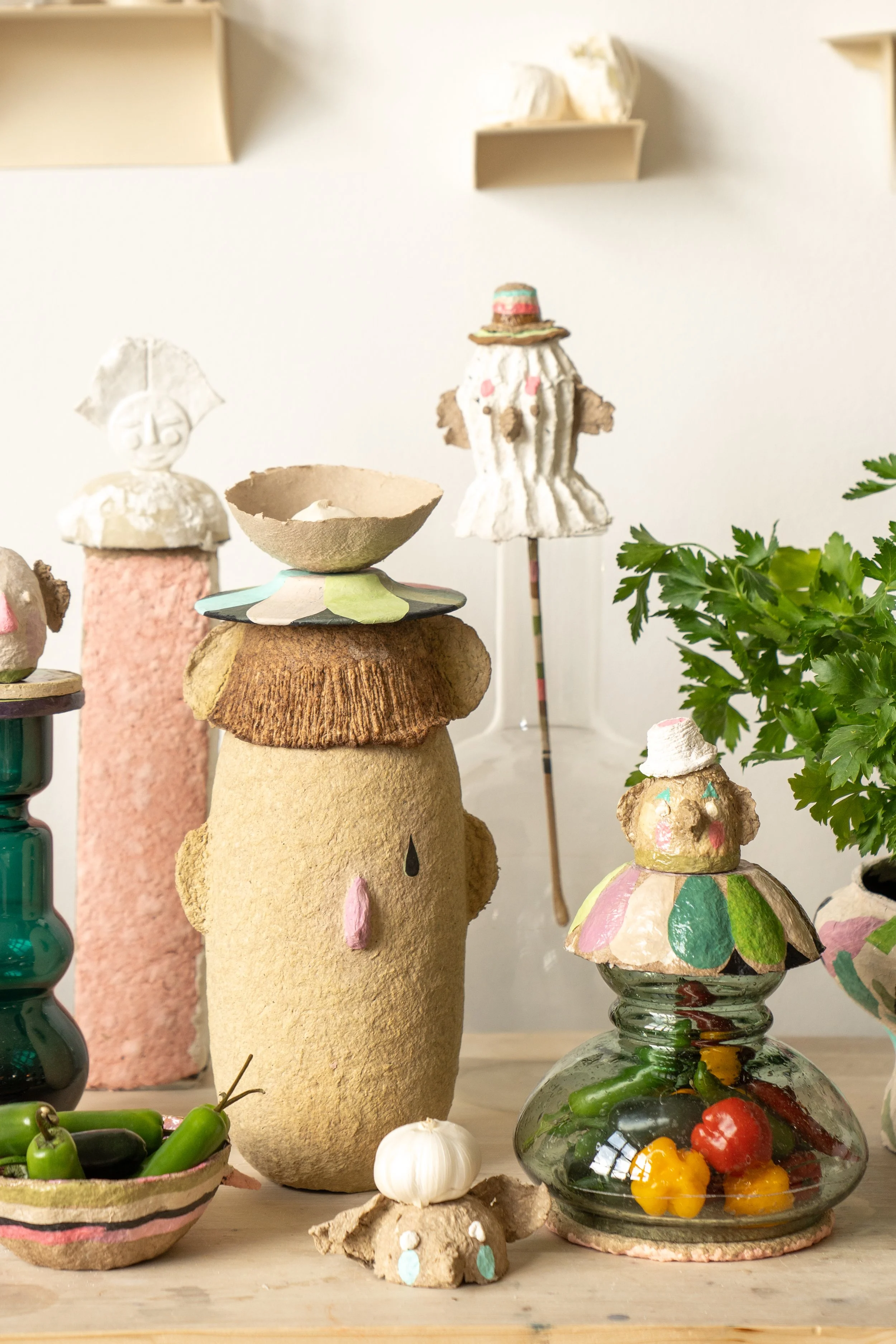
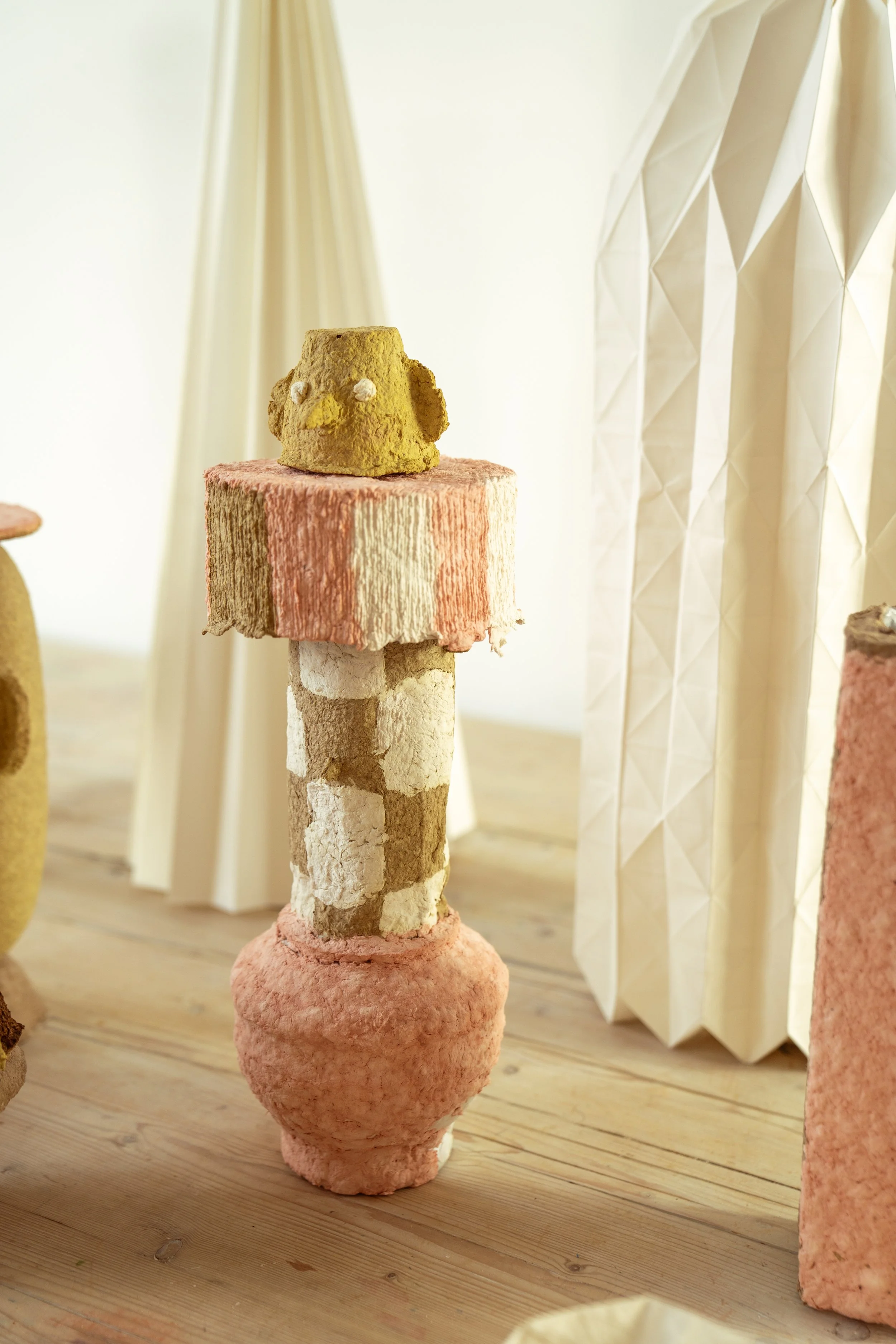
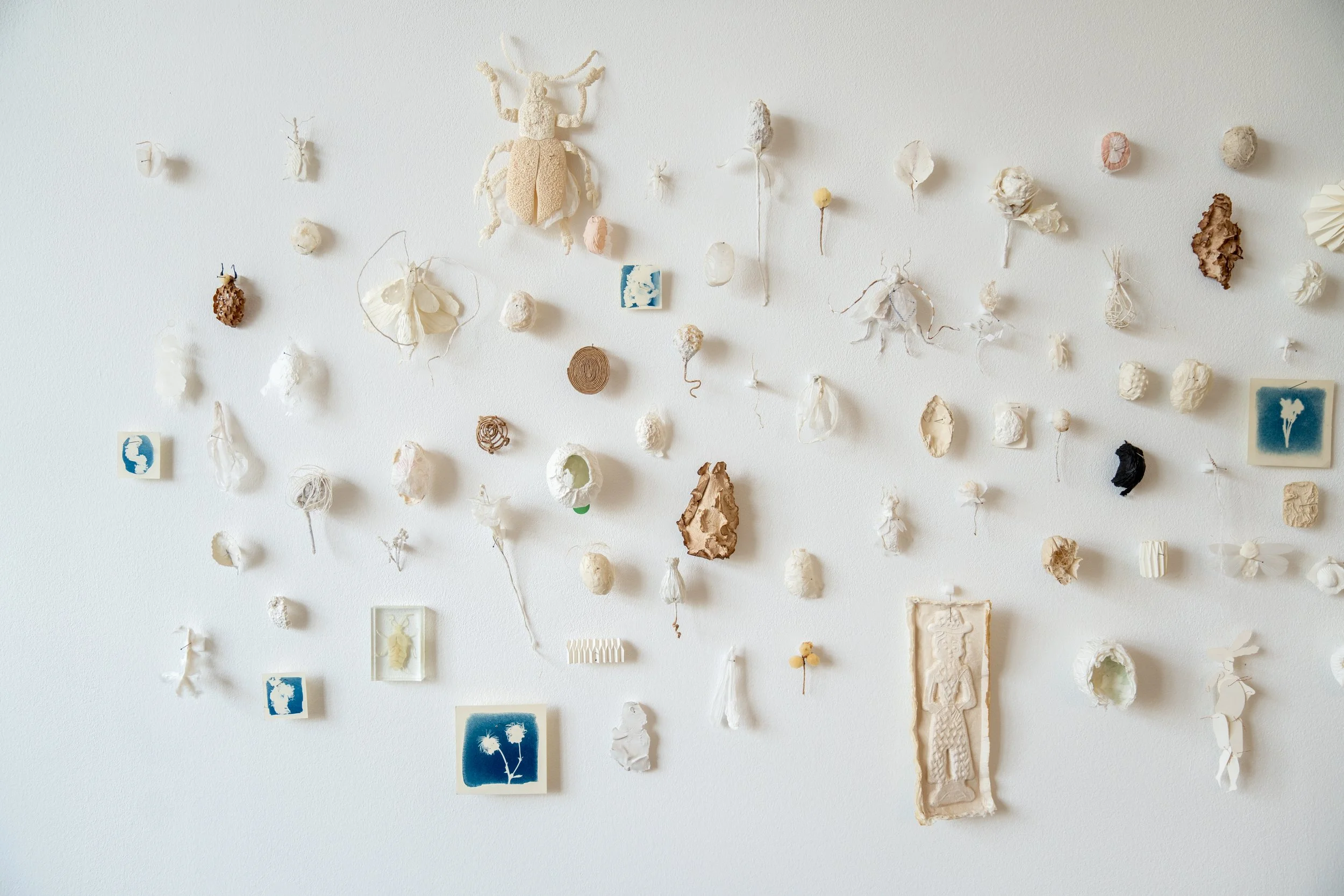
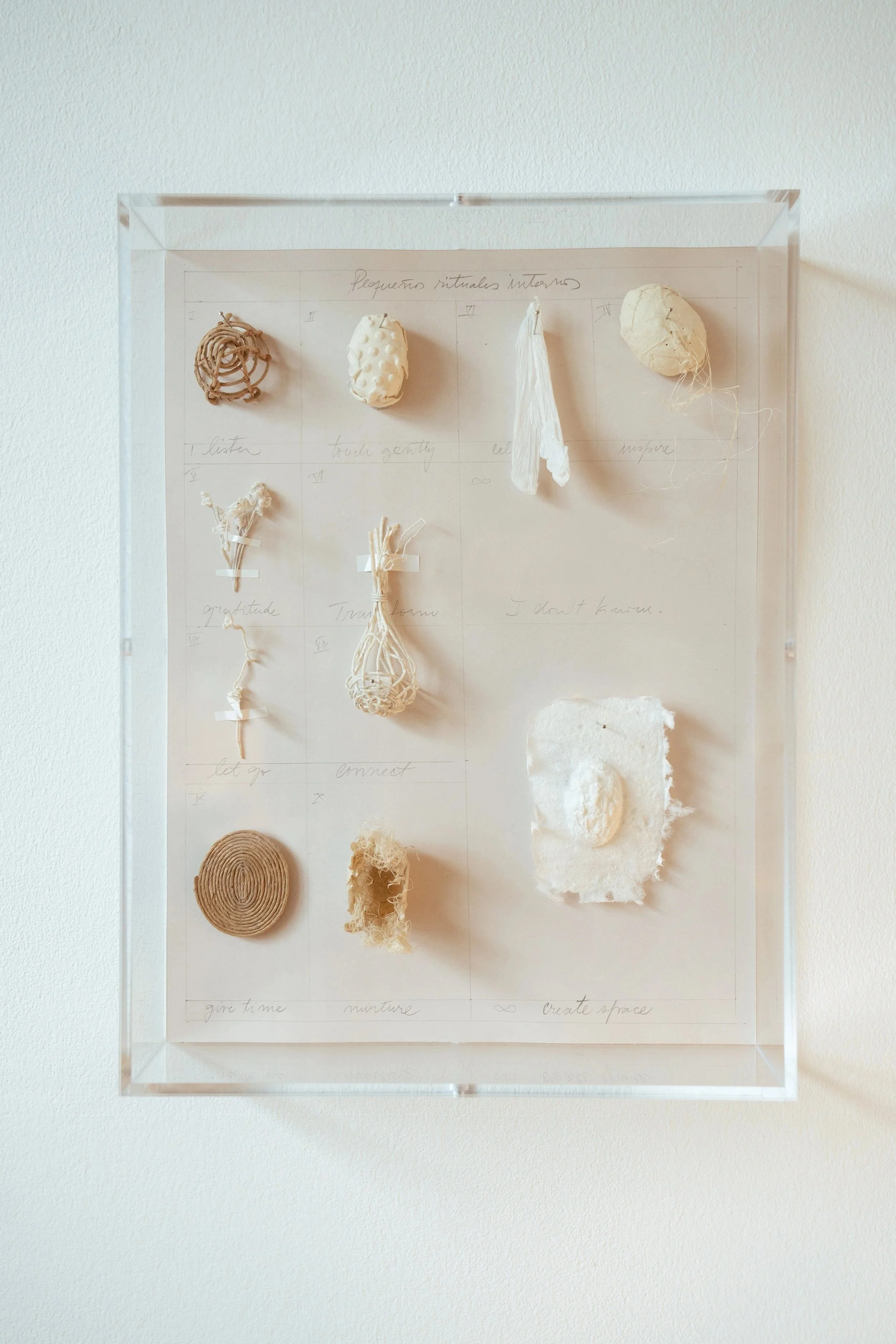
Working with paper pulp means going back to the beginning, rethinking the flat surface we know as paper, and reconnecting with the way it is made from water and fibres. This process reminds us that paper is essentially made of fibres.
There are many ways to prepare pulp, typically using plant fibres such as bark, grasses or small shrubs. It is essential to understand which fibres we are working with, as each one has its own characteristics that will become visible once the paper has dried.
Some fibres create smooth surfaces, while others produce rougher, more irregular or textured results. We can also manipulate the fibres by adding adhesives, cellulose or other materials to alter their behaviour and the final surface.
For me, working with pulp is a way of reconnecting with the material itself, understanding its origins, experimenting with its potential, and discovering how small changes in the process can produce entirely different results.
Papel & Pulpa
Trabajar con pulpa de papel significa volver a los orígenes, replantearnos la superficie plana que conocemos como papel y reconectarnos con su proceso de elaboración a partir de agua y fibras. Este proceso nos recuerda que el papel está compuesto esencialmente por fibras.
Hay muchas formas de preparar la pulpa, por lo general utilizando fibras vegetales, como corteza, pastos o pequeños arbustos. Es fundamental comprender con qué fibras estamos trabajando, ya que cada una tiene sus propias características que se harán visibles cuando el papel se seque.
Algunas fibras crean superficies lisas, mientras que otras producen resultados más ásperos, irregulares o con textura. También podemos manipular las fibras agregando adhesivos, celulosa u otros materiales para alterar su comportamiento y la superficie final.
Para mí, trabajar con pulpa es una forma de reconectarme con el material, comprender sus orígenes, experimentar con su potencial y descubrir cómo pequeños cambios en el proceso pueden dar lugar a resultados completamente diferentes.
Collage & Gouache
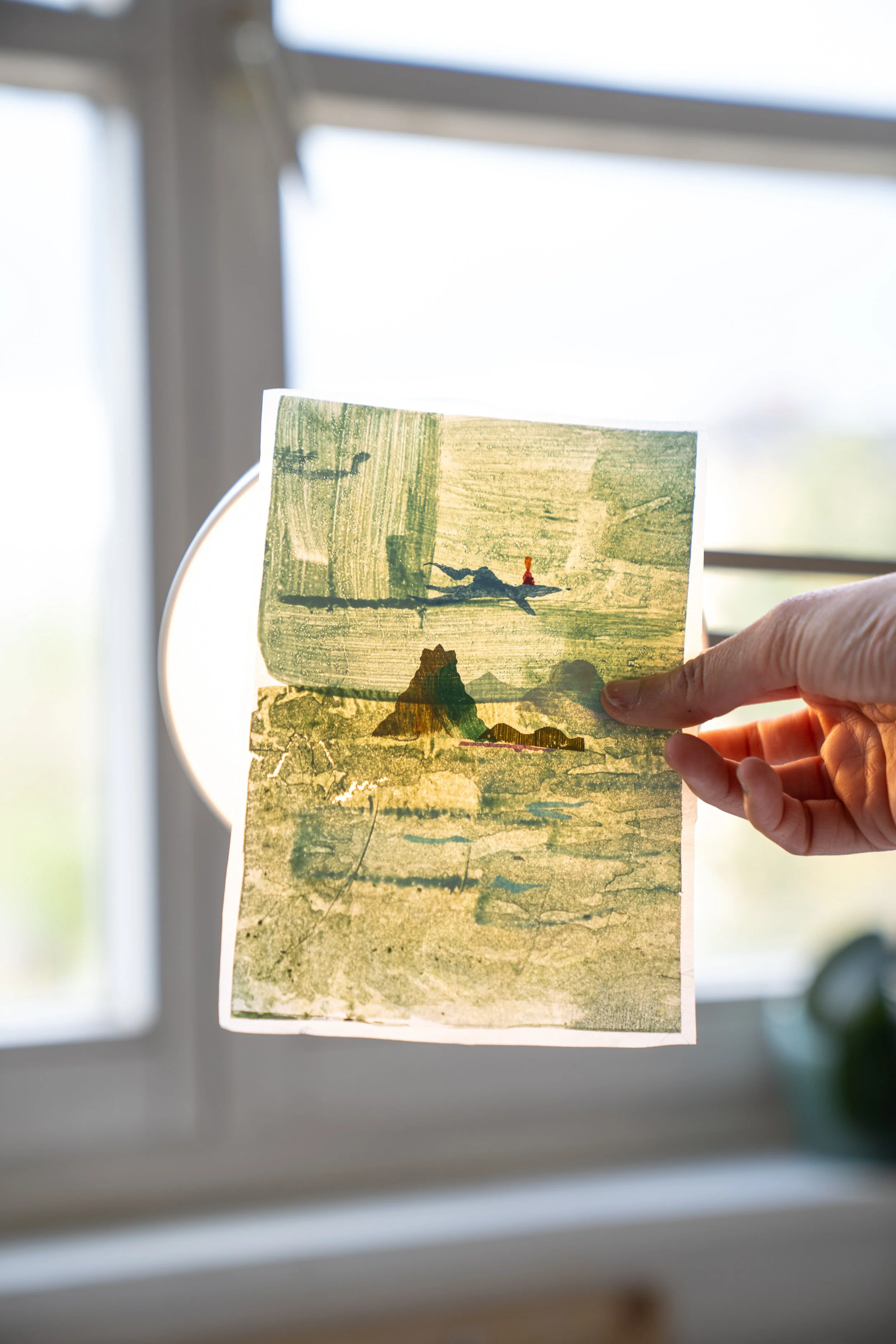
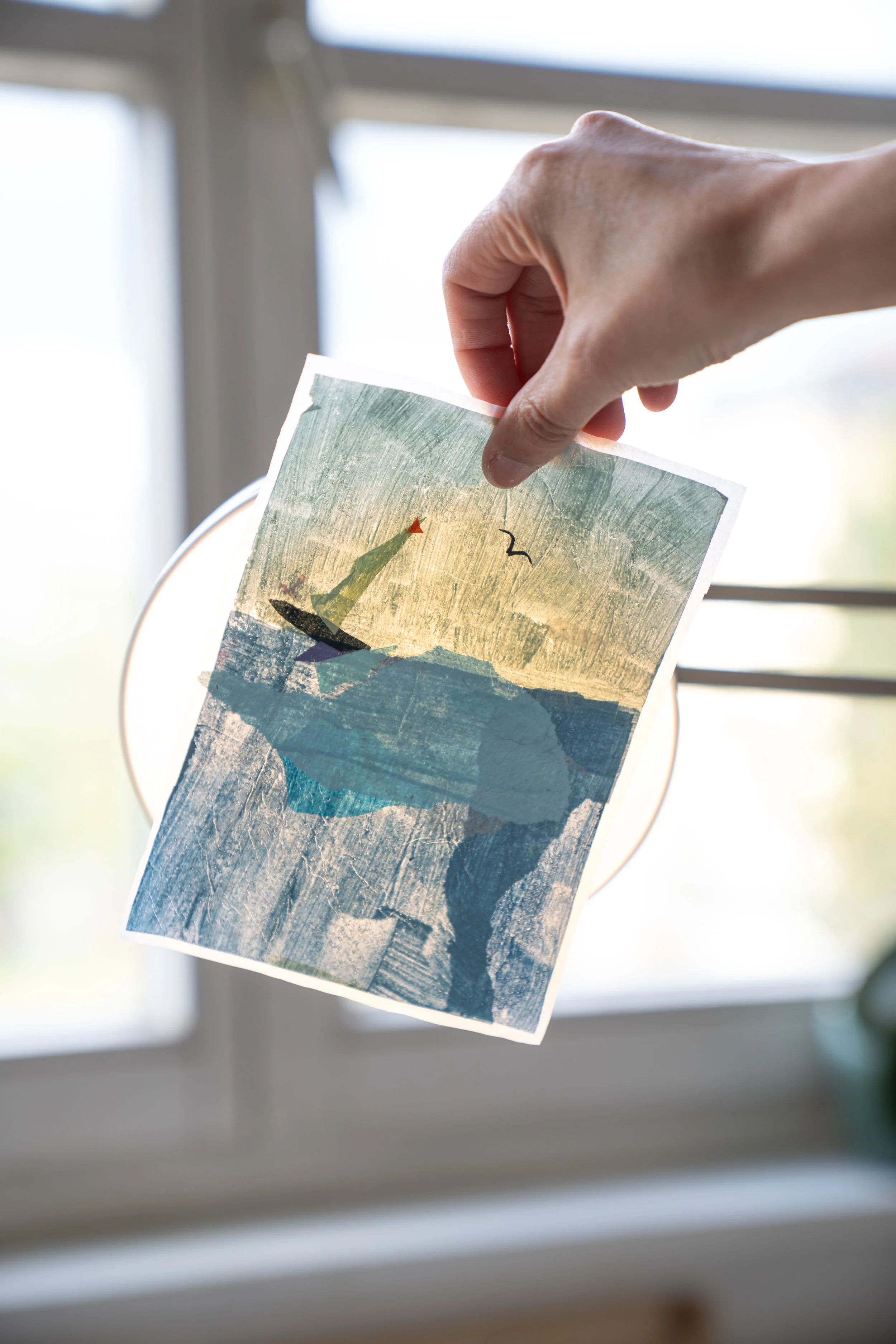
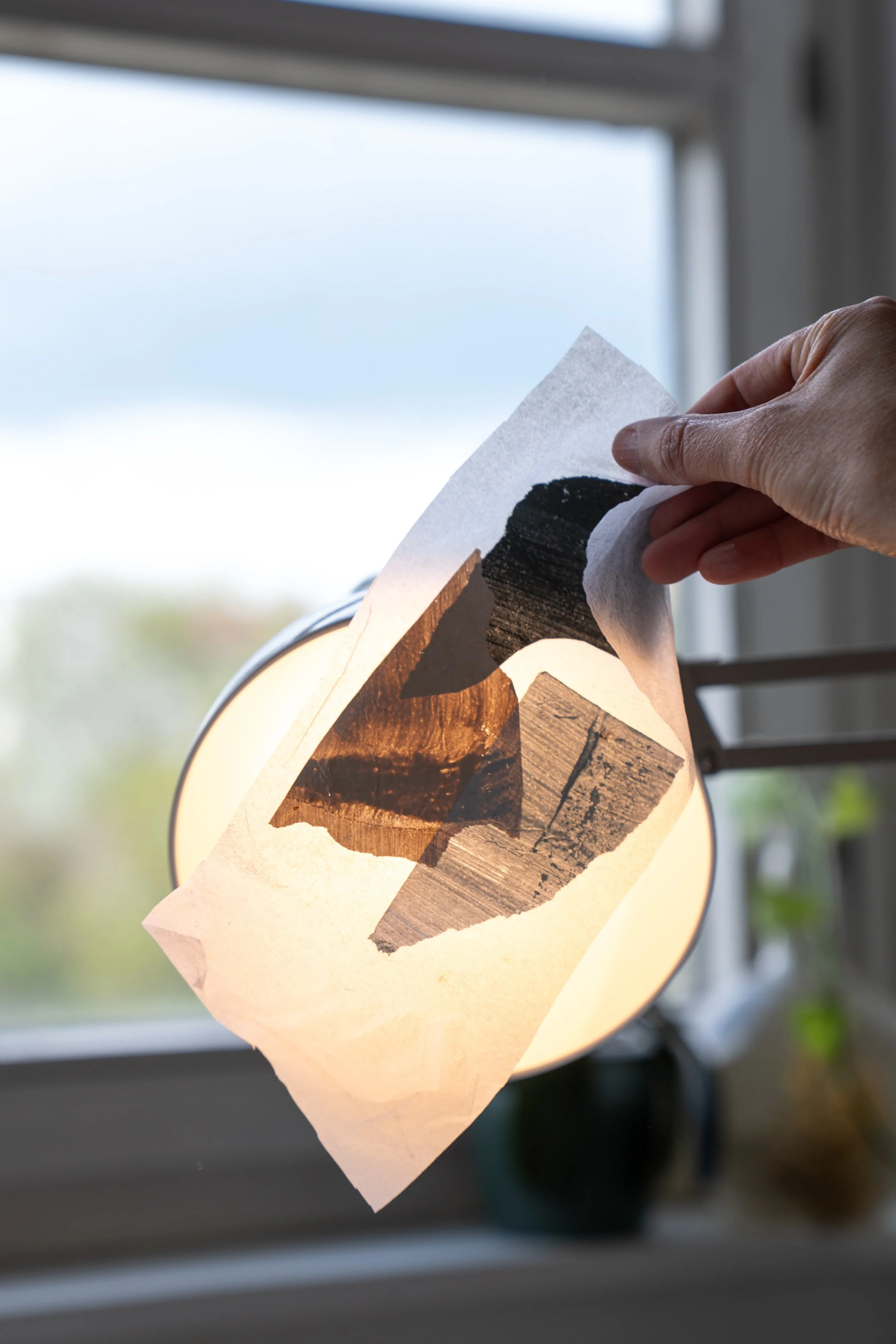
There are countless ways to approach collage. The word itself comes from the French verb coller, which simply means 'to glue'. I like to think of collage as a system of layers. I start with the background as the deepest layer, gradually building up the surface by adding and gluing very thin pieces of paper.
Before I start, I prepare each piece of paper individually. I either paint them with gouache or use a technique such as frottage to create a collection of textures, colours and shapes.
Collage gives me the opportunity to experiment with different adhesives and discover how they interact with the paper. Since I often work with very thin tissue paper, I usually finish by carefully pressing or ironing the surface to make it smooth and even.
Collage is one of the techniques that leaves the most room for play, experimentation and imagination, as it allows you to move elements around very freely.
-
Hay muchas formas de abordar el collage. La palabra collage proviene del verbo francés «coller», que simplemente significa «pegar». Me gusta pensar en el collage como un sistema de capas. Empiezo por el fondo, que es la capa más profunda, y voy construyendo poco a poco la superficie añadiendo y pegando trozos de papel muy finos.
Antes de empezar, preparo cada trozo de papel por separado. O bien los pinto con gouache, o bien utilizo una técnica como el frottage para crear una colección de texturas, colores y formas.
El collage me brinda la oportunidad de experimentar con diferentes adhesivos y descubrir cómo interactúan con el papel. Como suelo trabajar con papel de seda muy fino, normalmente termino presionando o planchando con cuidado la superficie para que quede lisa y uniforme.
El collage es una de las técnicas que más margen deja para el juego, la experimentación y la imaginación, ya que permite mover los elementos con total libertad.
Papier-mâché
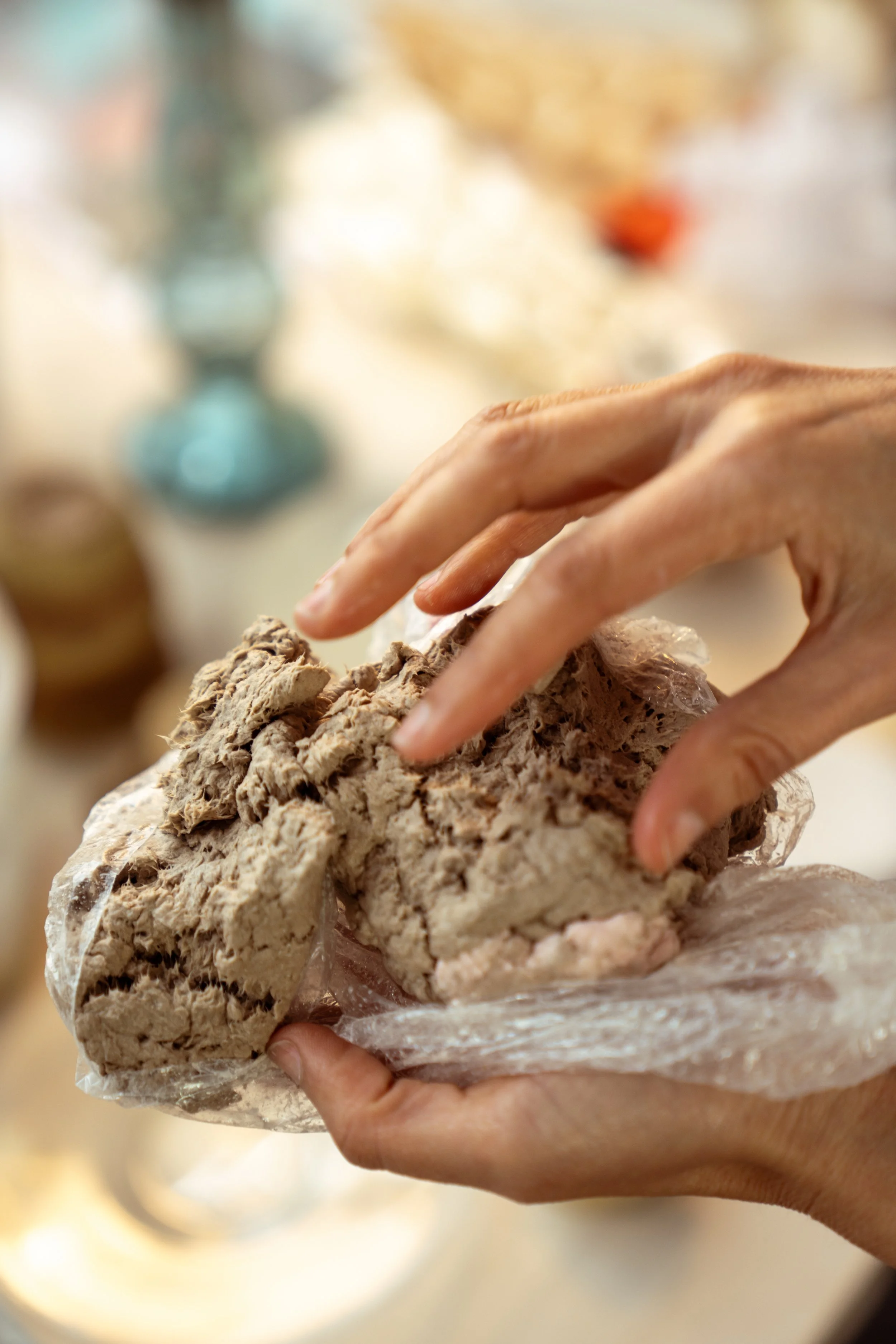
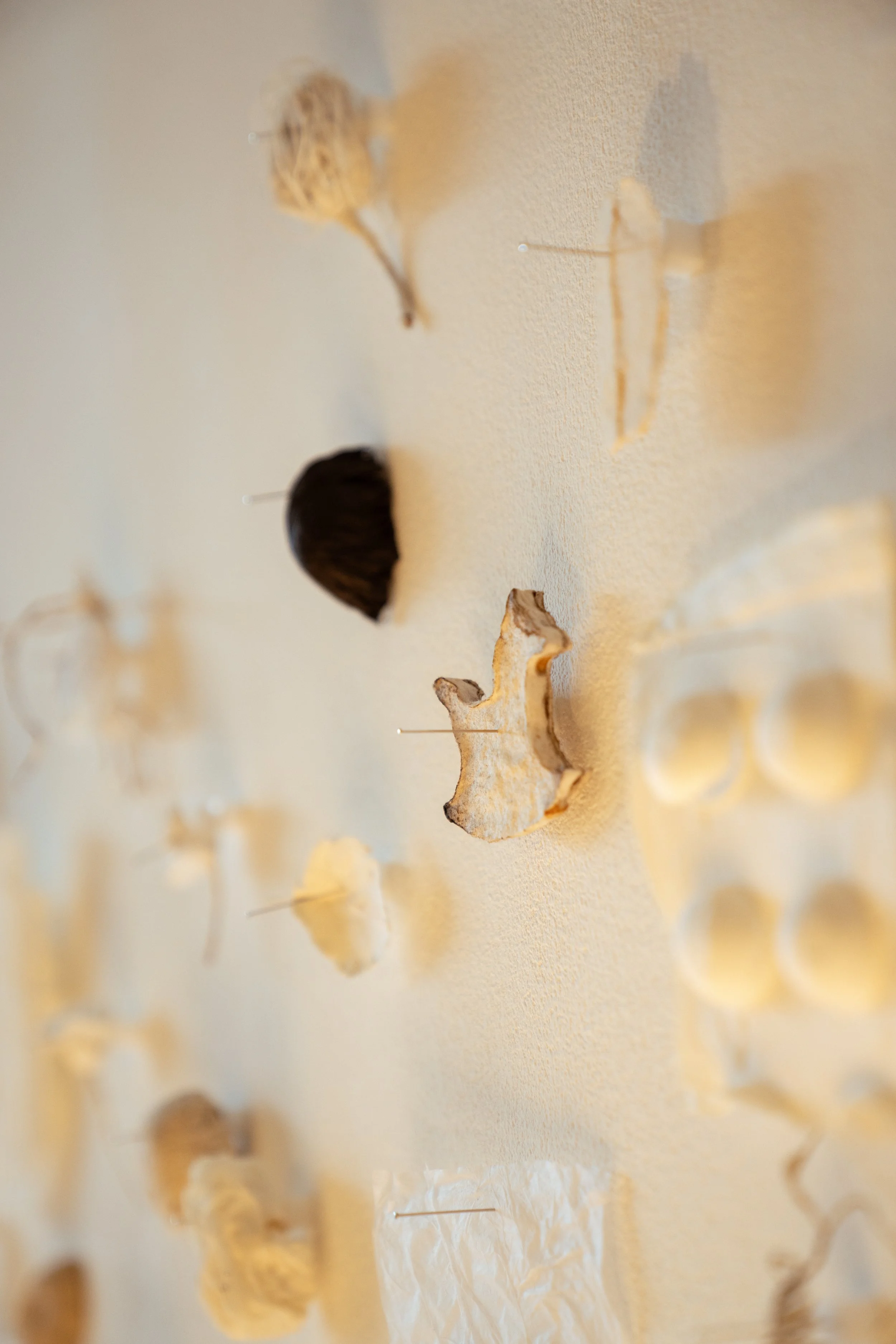
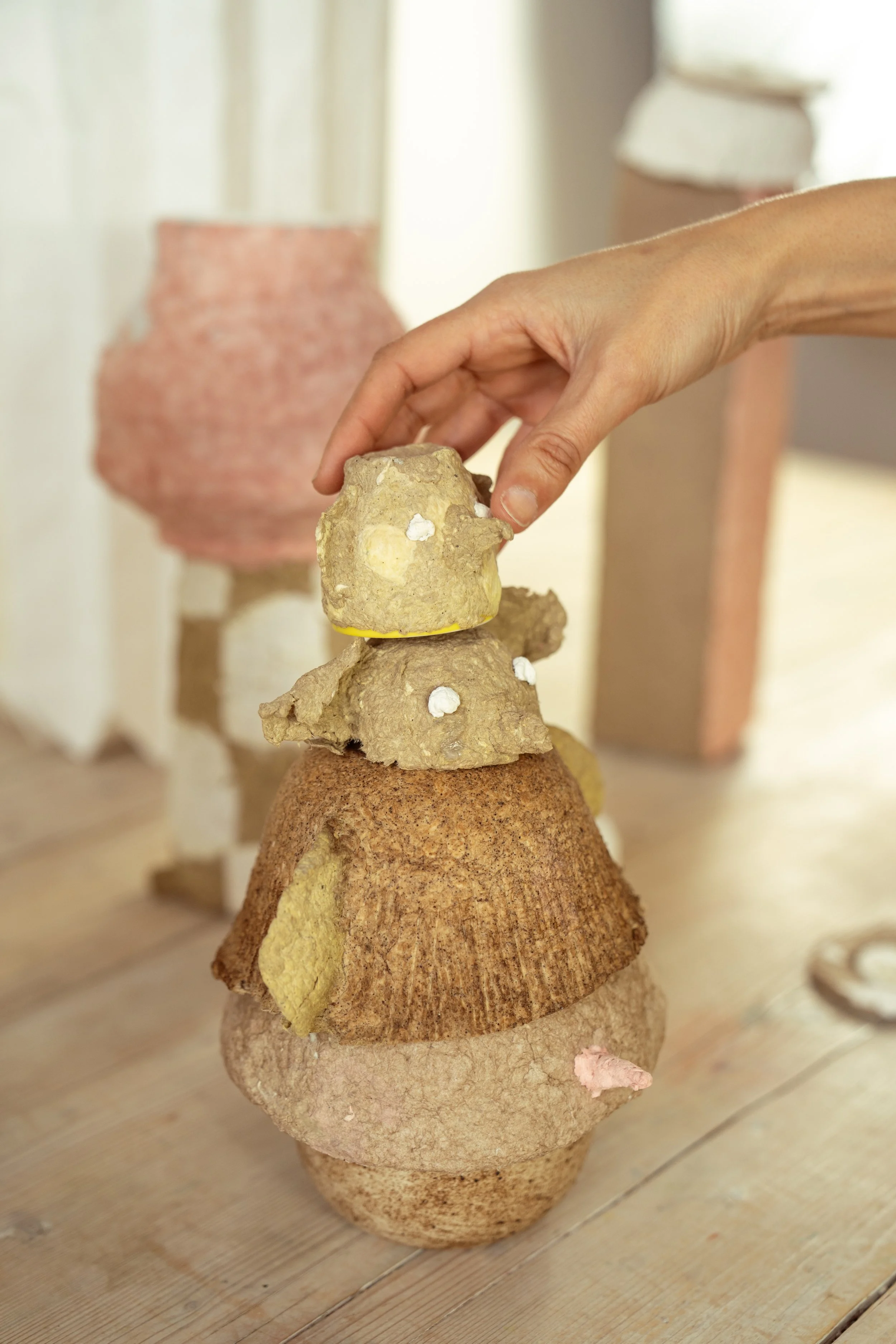
Working with papier-mâché is one of the most playful processes in my work. It evokes the feeling of being a child again: your hands get messy, the paper gets sticky, and the process becomes as important as the final result.
There are many ways to prepare the material, depending on the texture and appearance you want to achieve. This can involve soaking and blending paper, preparing pulp and experimenting with different glues to create a paste with the right texture for each project.
One of the things I love most about papier-mâché is the way it transforms. A piece can appear heavy and solid during the creative process, but once it has dried, it becomes incredibly light. This unexpected change never fails to make me smile.
El proceso de trabajo con papel maché es muy descontracurado y divertido. Me hace volver un poco a cuando era chica: te ensuciás las manos, la pulpa se vuelve pegajosa, hay que preparar una masa y, de repente, todo se vuelve mucho más relajado. En este proceso, confiar es todo.
Hay muchas maneras de preparar el material, dependiendo de la textura y el acabado que quieras conseguir. Se puede remojar y triturar el papel, preparar la pulpa y experimentar con distintos pegamentos y proporciones hasta encontrar la consistencia adecuada para cada proyecto.
Una de las cosas que más me gustan del papel maché es su capacidad de transformarse. Mientras lo estás trabajando, una pieza puede parecer pesada, sólida y hasta un poco tosca. Pero cuando se seca, se vuelve increíblemente liviana.